
Natural Stone Countertops: Materials, Styles, and Key Considerations
Natural stone countertops bring the raw beauty of the earth into your home while offering practical surfaces for daily use. These materials form deep underground over millions of years, creating unique patterns and colors that no manufactured product can replicate. Each slab tells its own story through distinct veining, mineral deposits, and color variations that make your countertop one of a kind.
When you choose natural stone for your kitchen countertops, you're selecting from materials like granite, marble, quartzite, soapstone, slate, travertine, and limestone, each with different strengths, maintenance needs, and visual characteristics. Understanding these differences helps you pick the right stone for your space and lifestyle. Some stones handle heavy kitchen use better than others, while certain varieties need more care to stay looking their best.
Your choice depends on how you use your space, what look you want to achieve, and how much maintenance you're willing to do. This guide walks you through the main types of natural stone, what each material can handle, and how to keep your countertops in good shape for years to come.
Types, Materials, and Styles of Stone Countertops
Natural stone countertops and engineered stone options each bring distinct characteristics to your kitchen or bathroom. Your choice depends on durability needs, aesthetic preferences, and maintenance requirements.
Overview of Natural Stone Slabs and Stone Slab Selection
Natural stone slabs are cut directly from quarried rock formations. Each slab shows unique patterns, veining, and color variations that develop over millions of years through geological processes.
When selecting stone slabs, you need to view the actual pieces in person. No two natural stone slabs are identical, even from the same quarry. The patterns, movement, and color intensity vary significantly between individual pieces.
Key factors in slab selection:
- Visual inspection - Check for cracks, fissures, or weak spots
- Finish type - Polished, honed, or leathered surfaces create different looks
- Thickness - Standard options are 2cm or 3cm thick
- Color consistency - Determine if variations match your design goals
You should also consider the size of your project. Larger countertop areas may require multiple slabs, and matching patterns becomes more challenging.
Granite Countertops: Beauty and Performance
Granite countertops rank among the most durable stone options for kitchens. This igneous rock forms under intense heat and pressure, creating a dense material that resists scratches, heat, and daily wear.
You can place hot pans directly on granite without damage. The material rates 6-7 on the Mohs hardness scale, making it harder than most kitchen knives. This means your granite surface won't scratch during normal food preparation.
Granite offers extensive color choices. You'll find options ranging from black and gray to pink, blue, and green, often with dramatic veining or speckled patterns.
Maintenance requirements:
- Seal every 1-2 years depending on porosity
- Clean with mild soap and water
- Wipe up acidic spills promptly to prevent etching
Your granite countertops will maintain their appearance for decades with minimal care.
Marble Countertops: Timeless Appeal and Care
Marble countertops provide a classic, luxurious appearance that's been valued for centuries. This metamorphic stone features soft veining patterns in whites, grays, and creams that create an elegant aesthetic.
The material stays naturally cool, which makes it ideal for rolling pastry dough or working with chocolate. Professional bakers often prefer marble surfaces for this reason.
However, marble is softer and more porous than granite. It rates 3-4 on the Mohs hardness scale, making it prone to scratches and etching from acidic substances like lemon juice, wine, or vinegar.
Care considerations:
- Seal every 3-6 months
- Use cutting boards and trivets consistently
- Clean spills immediately, especially acids
- Accept that patina develops over time
You should consider marble for bathroom vanities or low-traffic areas rather than busy kitchens if you want to minimize wear concerns.
Quartzite Countertops: Strength and Elegance
Quartzite countertops combine marble-like beauty with granite-level durability. This metamorphic stone starts as sandstone and transforms under heat and pressure into an extremely hard material.
You get a surface that rates 7 on the Mohs hardness scale, making it harder than granite. Quartzite resists scratches, heat, and staining better than most natural stone options when properly sealed.
The stone typically displays subtle veining in neutral tones. Popular varieties include white, gray, and beige backgrounds with delicate patterns that resemble marble.
Performance benefits:
- Heat resistant for hot cookware
- Low porosity when sealed properly
- Scratch resistant during food prep
- UV stable for outdoor applications
Your quartzite requires sealing similar to granite, but the frequency depends on the specific variety's porosity.
Soapstone and Travertine Countertops: Unique Advantages
Soapstone countertops offer a distinctive matte appearance and smooth texture. This metamorphic stone is naturally non-porous, so you don't need to seal it. The material darkens over time, developing a rich patina that many homeowners appreciate.
You can sand out scratches in soapstone because the stone's composition remains consistent throughout. The material rates 1-5 on the Mohs hardness scale depending on talc content, making it softer than granite but highly heat resistant.
Travertine countertops bring earthy, textured beauty to your space. This sedimentary stone forms in hot springs and features natural pits and voids that create character. You'll find warm beige, tan, and cream tones that work well in Mediterranean or rustic designs.
Travertine requires more maintenance than denser stones. The porous surface needs regular sealing to prevent staining and moisture absorption. Your travertine works best in bathrooms or low-use areas rather than high-traffic kitchens.
Engineered Stone and Quartz Countertops: Advanced Options
Engineered stone combines natural quartz crystals with polymer resins and pigments. Quartz countertops contain 90-95% crushed quartz, making them extremely hard and durable while offering consistent patterns that natural stone can't match.
You don't need to seal quartz countertops because the resin makes them non-porous. This means better stain resistance and easier maintenance compared to natural stone options. The material resists bacteria growth without requiring special treatments.
Engineered stone advantages:
Feature
Benefit
Consistency
Uniform patterns and colors throughout
Maintenance
No sealing required
Durability
Scratch and stain resistant
Options
Wide range of colors and patterns
Your quartz countertops can mimic natural stone appearances or create bold, solid colors not found in nature. However, the material doesn't tolerate high heat as well as granite or quartzite. You need to use trivets with hot pans to prevent damage.
Engineered stone costs compare to mid-range granite but offer predictable performance. You sacrifice the unique character of natural stone slabs for consistency and lower maintenance requirements.
Design, Durability, and Maintenance Insights
Natural stone countertops require careful planning for design integration and ongoing care to maintain their appearance. Understanding how to select the right material, coordinate with other surfaces, and perform regular maintenance will help you maximize your investment.
Selecting the Right Countertop for Your Space
Your choice of kitchen countertops should match both your design preferences and practical needs. Granite works well for high-traffic kitchens because it resists heat and scratches when sealed properly. Marble suits spaces where you want elegant veining but can tolerate some etching from acidic foods.
Quartzite combines durability with marble-like beauty, making it ideal if you want both strength and visual appeal. Soapstone develops a natural patina over time and needs no sealing, which makes it a low-maintenance option. Consider your cooking habits when choosing countertop materials.
Thickness affects both appearance and durability. Standard slabs come in 3/4-inch or 1 1/4-inch options. Thicker stone provides more visual weight and works better for kitchen islands where you want a substantial look.
Integration With Backsplash and Flooring
Coordinating your natural stone countertops with your backsplash and flooring creates a unified kitchen design. You can use the same stone for both countertops and backsplash to create a seamless look. This approach works especially well with dramatic stones like marble.
Alternatively, you can pair different materials for contrast. Light-colored countertops pair well with darker backsplash tiles to define separate areas. Your flooring should complement rather than compete with your countertop choice.
Common pairing strategies:
- Match stone countertops with neutral backsplash tiles
- Use contrasting colors between countertops and cabinetry
- Coordinate stone veining with floor patterns
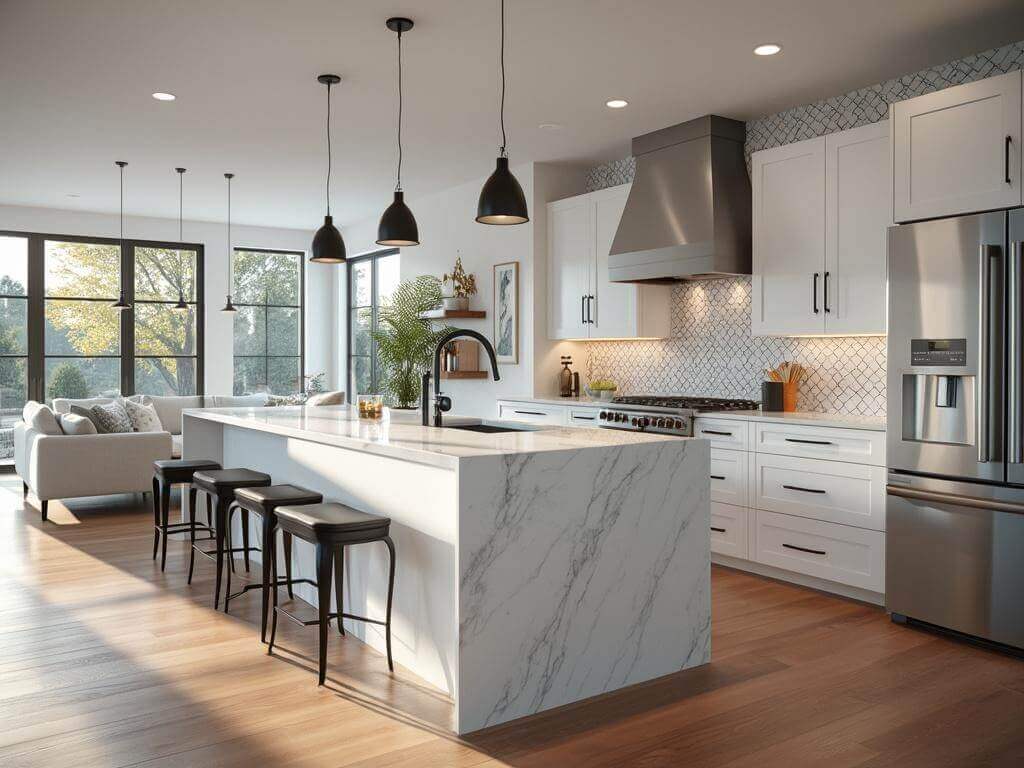
- Create focal points with waterfall edges on islands
Test samples in your space under different lighting conditions before making final selections.
Cleaning, Sealing, and Polishing Best Practices
Daily cleaning of durable stone requires only warm water and mild soap with a soft cloth. Avoid acidic or harsh cleaners that can damage the surface or break down sealers. Wipe spills immediately to prevent staining, especially on porous stones.
Most natural stone countertops need resealing every 6 to 12 months depending on use. Test your sealer by placing water drops on the surface. If water beads up, your sealer is working. If it soaks in within a few minutes, you need to reseal.
Use water-based impregnating sealers for best results. Apply the sealer evenly, let it penetrate for the recommended time, then buff away excess. Polishing maintains shine on polished finishes, but honed surfaces don't require this step.
For stubborn stains, make a paste from baking soda and water. Apply it to the stain, cover with plastic wrap, and leave for 24 hours before wiping clean.
Longevity and Durability Factors for Stone Surfaces
Natural stone countertops can last a lifetime with proper care. Granite and quartzite rank among the most durable stone options, resisting scratches, heat, and daily wear. These materials rarely need replacement if maintained correctly.
Marble and limestone are softer stones that show wear more readily. They develop character through etching and patina over time. Some homeowners appreciate this aging process as part of the stone's appeal.
Durability rankings by stone type:
- Quartzite - highest scratch and heat resistance
- Granite - excellent all-around durability
- Soapstone - scratch-prone but heat-resistant
- Marble - beautiful but requires careful use
Heat resistance is a key advantage of all stone types. You can place hot pans directly on sealed granite or quartzite without damage. Weight is another consideration since stone requires sturdy cabinet support. Professional installation ensures your cabinets can handle the load and prevents cracking during placement.
Frequently Asked Questions
Stone countertops involve specific material properties, maintenance requirements, and cost factors that homeowners need to understand. The right choice depends on your lifestyle, budget, and willingness to maintain the surface over time.
What are the main types of stone used for kitchen and bathroom countertops?
Granite stands as the most popular natural stone for countertops. It offers high durability and comes in hundreds of colors and patterns due to its mix of quartz, feldspar, and mica minerals.
Marble brings a classic, elegant look with soft veining patterns. You'll find it in white, gray, and cream tones, though it's softer than granite and more prone to etching from acidic substances.
Soapstone provides a smooth, matte surface that darkens over time. It's non-porous and doesn't require sealing, making it practical for busy kitchens.
Quartzite is a natural stone that's harder than granite. It features colors ranging from white to gray with natural veining similar to marble but with greater durability.
Limestone and travertine offer softer, earth-toned options. These stones work better in bathrooms than kitchens because they're more susceptible to scratches and stains from acidic foods.
How do stone countertops compare to quartz in durability and maintenance?
Natural stone requires periodic sealing to prevent stains and moisture absorption. You'll need to reseal granite every one to three years depending on use, while marble may need more frequent attention.
Quartz countertops are engineered products made from crushed stone and resin. They never need sealing and resist stains better than most natural stones.
Granite matches or exceeds quartz in heat resistance and scratch resistance. You can place hot pots directly on granite without damage, though quartz manufacturers recommend using trivets.
Natural stone shows more variation in pattern and color from slab to slab. Quartz offers more consistent patterns and colors throughout the material.
Stone can chip at edges or corners if struck hard. Quartz has similar vulnerability to impact damage at edges.
Which stone is considered the best choice for countertops, and why?
Granite ranks as the top choice for kitchen countertops among natural stones. Its hardness and density make it highly resistant to scratches, heat, and stains when properly sealed.
The feldspar content in granite provides natural water resistance. The silicate minerals don't react with acidic substances like lemon juice or vinegar, giving it an advantage over marble in kitchens.
Marble works better for bathroom vanities than kitchen counters. Bathroom products are typically alkaline rather than acidic, which means less risk of etching the surface.
Your best choice depends on your specific needs. A household that cooks frequently needs the durability of granite or quartzite.
If you prioritize appearance over maximum durability and avoid acidic spills, marble might suit your needs. For low-maintenance options, soapstone requires no sealing despite being a natural stone.
What factors most affect the total cost of purchasing and installing a stone countertop?
The stone type creates the biggest price difference. Granite typically costs $40 to $100 per square foot installed, while marble ranges from $50 to $150 per square foot.
Rarity and sourcing location impact the price significantly. Stones quarried from distant countries cost more due to shipping expenses.
Slab thickness affects both material and installation costs. Standard 3-centimeter slabs cost more than 2-centimeter options but provide greater durability.
Edge profiles add to the total cost. Simple straight edges cost less than decorative edges like ogee or bullnose profiles.
Your kitchen layout influences installation expenses. Countertops with many seams, cutouts for sinks and cooktops, or unusual angles require more labor and may generate more waste.
Removal and disposal of old countertops typically adds $100 to $300 to your project. Plumbing disconnection and reconnection for sink installation creates additional costs.
What are the key pros and cons of choosing a stone countertop for a home?
Natural stone adds significant value to your home. Most buyers prefer natural stone over other countertop materials according to consumer surveys.
Each slab is unique, giving your kitchen a one-of-a-kind appearance. You won't find another countertop with the exact same pattern and coloring.
Stone countertops last for decades with proper care. Granite and quartzite can outlast the rest of your kitchen without needing replacement.
Heat resistance allows you to place hot cookware directly on the surface. This practical benefit makes cooking easier and protects your countertops from thermal shock.
The main drawback is maintenance requirements. You must seal most natural stones regularly to prevent staining and water damage.
Stone can crack or chip if heavy objects strike it with force. Repairs are possible but may not be invisible depending on the damage location.
Some stones, particularly marble and limestone, stain easily from acidic foods and drinks. You need to wipe up spills quickly to prevent permanent marks.
The weight of stone requires strong cabinet support. Your existing cabinets may need reinforcement before installation.
How do you properly clean, seal, and maintain a stone countertop to prevent stains and damage?
Clean your stone countertops daily with warm water and a soft cloth. Use a pH-neutral cleaner specifically designed for natural stone rather than general-purpose cleaners.
Avoid acidic cleaners like vinegar, lemon juice, or products containing citrus. These substances can etch marble and limestone surfaces, creating dull spots.
Don't use abrasive scrubbing pads or powders. They can scratch the surface and remove the polish over time.
Seal your countertops according to the stone type and use level. Test if your countertop needs resealing by dripping water on the surface. If water beads up, the seal is good. If water absorbs within a few minutes, you need to reseal.
Apply sealer by spreading it evenly across the clean, dry surface with a soft cloth. Let it penetrate for the time specified on the product label, usually 15 to 30 minutes.
Wipe off excess sealer completely before it dries. Buff the surface with a clean cloth until no streaks remain.
Address spills immediately, especially from wine, coffee, oil, or acidic foods. Blot spills rather than wiping them to prevent spreading.
Use cutting boards rather than cutting directly on the stone. While granite resists scratches well, repeated knife use can dull your blades and potentially damage the surface over time.
.jpg)

